José Bedia
A pioneer in contemporary Cuban art, José Bedia emerged as a leading figure in the Volumen 1 exhibition, which transformed the country’s art scene in the 1980s. Over the past three decades, his work has gained international acclaim, featured in major exhibitions like Magiciens de la Terre (1989), and earning top honors such as First Prize at the Beijing Biennale (2010). His pieces are part of prestigious collections, including The Museum of Modern Art, The Guggenheim, Tate Modern, and Miami’s Pérez Art Museum (PAMM). Known for his distinctive visual language, Bedia’s work delves into tribal traditions, historical narratives, and social themes, creating powerful connections across cultures.
José Bedia was born on January 13, 1959, in Havana, Cuba, where he grew up and studied in the capital district of Luyanó in the municipality of 10 de Octubre. From an early age, he excelled in drawing, comics, and illustration, and as a teenager, he joined the famous San Alejandro Academy.
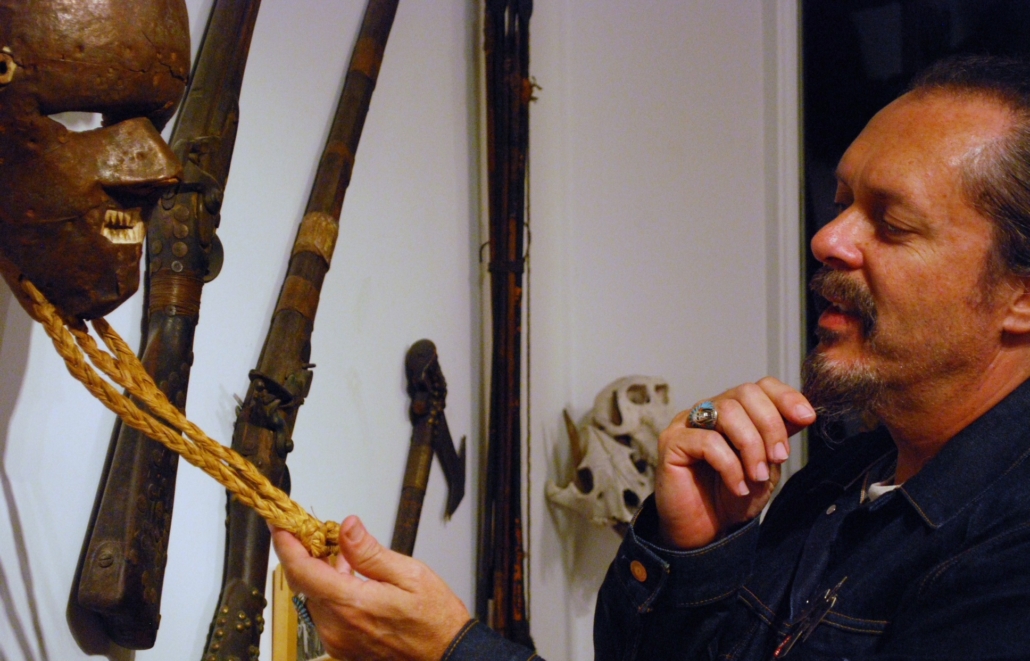
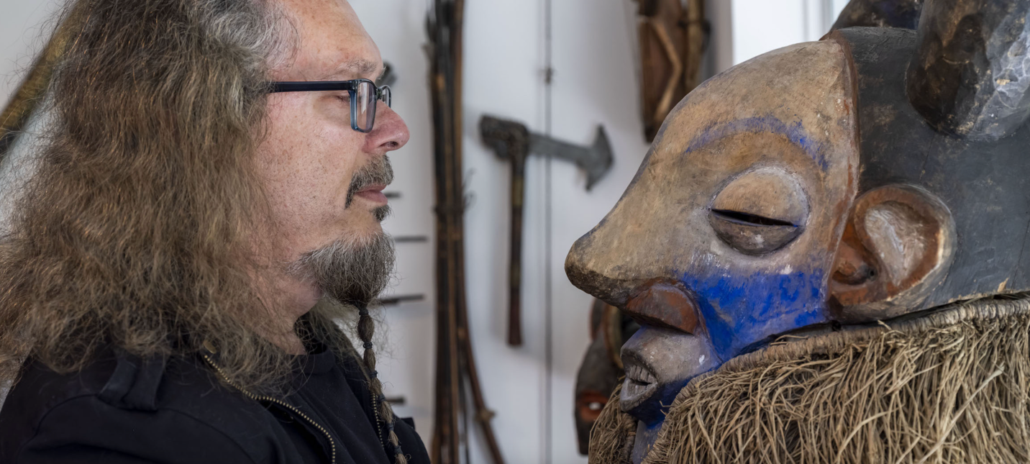
Bedia graduated with honors from the ISA, Instituto Superior de Arte de la Habana, Cuba. He pioneered the radical transformation of Cuban Art that inaugurated the Exhibition Volumen 1, which Bedia was an integral part of. His passion for the primal Amerindians complemented his anthropological studies on Afro-Transatlantic cultures, studying in-depth the faith, beliefs, and religion of the “La Regla Kongo” (in which he was initiated in 1983), the “Regla de Ocha,” and the Leopard Society of Abakuá, among many others.
He traveled to Angola as part of the International Cultural Brigades, which supported the struggle of the Angolan-Cuban War against Namibia and South Africa. This contact with the mother continent and the war increased his interest in the African roots of American culture. This interest took him to visit countries such as Peru, Mexico, Haiti, the Dominican Republic, Puerto Rico, Zambia, Botswana, Kenya, and Tanzania. After residing in Mexico, he moved to Miami, Florida, where he now lives.
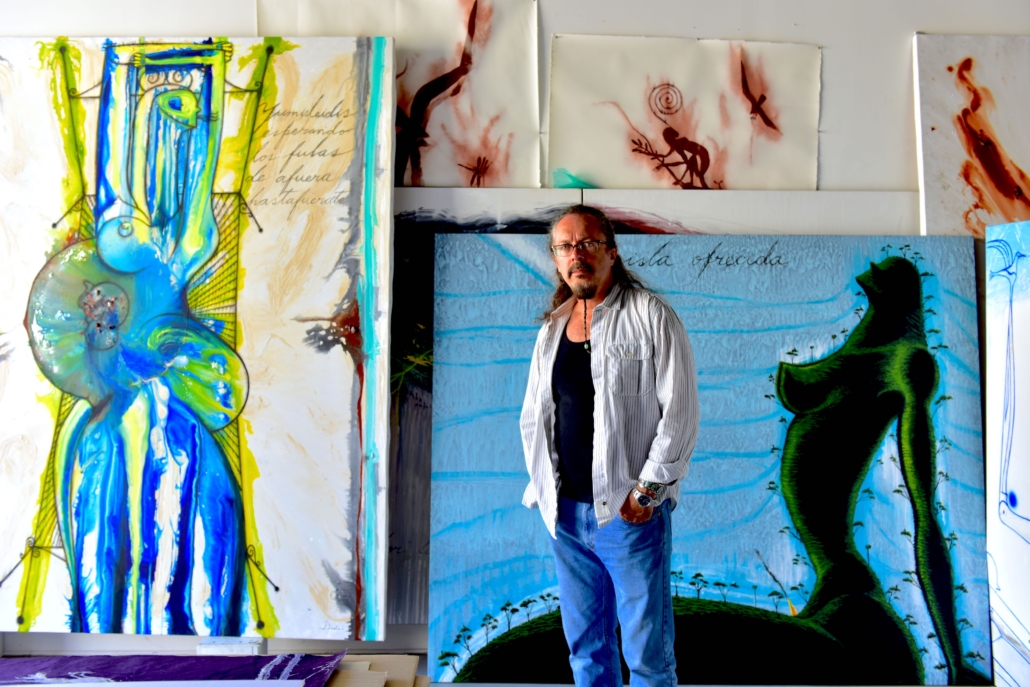
Bedia’s decisive and precise skill as a draftsman, striking pictorial capacity, and enigmatic and enveloping installations position him as one the most notorious and prestigious creators of art from the second half of the 20th century to the present. This vast knowledge marks his work and shows how cultural heritage influences our daily lives. His work merges his tribal and ethnographic interests, combining fieldwork with social and historical elements of many world traditions.
His work has been exhibited in the La Habana, Sao Paulo, Venice, and Beijing Biennales, where he has received awards and acclamation. His works are in important public and private collections including: the Museo Nacional Palacio de Bellas Artes (Havana, Cuba); MoMA, Metropolitan Museum of Art, Whitney Museum of American Art, Guggenheim Museum (New York City); Hirshhorn Museum and Sculpture Garden, (Washington, D.C.); Tate Modern (London, UK); Colección Daros (Zurich); MEIAC, DA2, IVAM, CAAM (Spain); MOCA and PAMM (Miami).
Ellies Award
2025 Lifetime Achievement Award Winner
$75,000
Images